Kratom Harvest Season in Indonesia: Wet vs Dry
The dry season kratom Indonesia months run from roughly May through September across the country’s two main growing regions, Kalimantan and Sumatra, with June, July, and August typically bringing the driest, most consistent conditions for leaf processing. This window matters to buyers because kratom leaf is highly moisture-sensitive — humidity and rainfall during harvest directly affect how evenly a batch dries, how it performs on lab testing, and how reliably a shipment can leave the warehouse on schedule. Understanding this agricultural calendar is just as important as comparing price per kilo when planning a wholesale order.
When Are the Dry Season Kratom Indonesia Months, Exactly?
Indonesia’s growing regions for Mitragyna speciosa follow a fairly predictable tropical pattern. Rainy season generally runs from October through April, with the heaviest rainfall between December and February. The dry season kratom Indonesia months then follow from roughly May through September, with the driest stretch usually landing in July and August. These are general regional averages, not guarantees — actual weather in any given year can shift the calendar by a few weeks in either direction, and farmers adjust harvest timing accordingly rather than working strictly off a fixed date.
During the core dry months, lower ambient humidity allows leaf to lose moisture faster and more evenly, whether it’s sun-dried on open racks or shade-dried under cover. That consistency is the main reason many wholesale buyers try to schedule their larger purchase orders around this period.
Kalimantan vs Sumatra: Regional Rainy and Dry Season Differences
Kratom sourcing in Indonesia is concentrated in West Kalimantan (particularly the Kapuas Hulu area) and parts of Sumatra. Both regions follow a broadly similar wet/dry pattern, though local microclimates, elevation, and river-basin humidity can shift the exact transition weeks.
| Region | Rainy Season | Dry Season | Typical Peak Harvest Window |
|---|---|---|---|
| Kalimantan (West Kalimantan / Kapuas Hulu) | October – April | May – September | July – August |
| Sumatra (growing districts) | October – April | May – September | June – August |
Because both regions dry out around the same time of year, national supply of freshly processed leaf tends to build through the middle of the dry season and taper off as rains return in October. Buyers sourcing from multiple regions should not expect the wet-season slowdown in one area to be offset by the other — the calendars largely overlap.
How the Dry Season Affects Leaf Moisture and Drying Capacity
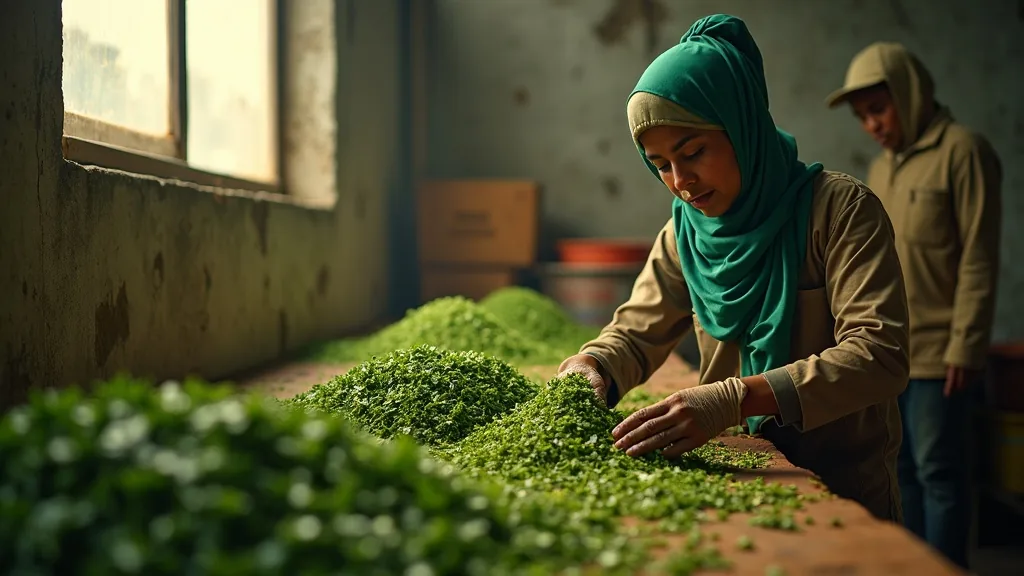
Freshly harvested kratom leaf carries a high natural moisture content and has to be dried down to a stable, low-moisture level before it can be safely milled into powder or crushed leaf for export. During the dry season kratom Indonesia months, farmers and processors can rely more heavily on direct or indirect sun-drying, which shortens drying time and reduces the risk of uneven moisture pockets inside a batch.
In the wet season, higher humidity and reduced sun exposure mean drying has to lean more on covered, shaded, or mechanically assisted methods (fans, dehumidified rooms, longer curing times) to reach the same target moisture level. This isn’t a quality death sentence — reputable processors adapt their methods year-round — but it does typically mean:
- Longer processing time per batch during wet months
- Higher vigilance needed against mold and mildew risk before milling
- More batch-to-batch variability that has to be caught through lab testing rather than assumed away
- Tighter warehouse humidity control once leaf is dried and bagged, to prevent moisture re-uptake
None of this is a claim about the effects of the product itself — it’s simply about how weather affects agricultural processing, moisture specs, and the consistency a buyer can expect from a given production run.
Why Harvest Season Timing Shapes Export Shipment Scheduling
Seasonal supply volume has a direct knock-on effect on export logistics. During peak dry-season months, more farms are actively harvesting and drying at once, which generally means larger available volumes of freshly processed leaf and shorter lead times between order confirmation and container loading. In the wet season, available volume can tighten, and lead times may stretch out as suppliers wait for batches to finish curing to spec.
This is one reason we recommend buyers think about shipment scheduling and harvest timing together rather than as separate conversations. Container booking, freight schedules, and destination-country customs documentation all take time regardless of season, and none of that timeline is something any supplier can shorten by promising faster customs clearance — clearance timing is controlled by the destination country’s own customs authority, not by the exporter. For a detailed look at how ocean freight, incoterms, and documentation work for European-bound orders specifically, see our guide on shipping Indonesian kratom to Europe — logistics, incoterms, and main export ports.
A Buyer’s Planning Calendar: Ordering Around Indonesia’s Kratom Seasons
For wholesale buyers who want predictable quality and fewer scheduling surprises, a few practical habits help:
- Place larger orders with lead time. If you want product harvested and dried during the core dry season kratom Indonesia months, place purchase orders well before July–August so processing and export logistics aren’t competing with everyone else’s peak-season demand at once.
- Build a small buffer stock. Carrying a modest safety stock through the wet-season months (October–April) reduces pressure to accept a rushed batch just to avoid running out.
- Ask for moisture and lab data per batch, not per season. Season is a useful planning signal, but it is not a substitute for actual Certificate of Analysis data on the specific lot you’re buying.
- Account for Indonesian public holidays. Periods around major national holidays can slow domestic logistics regardless of season, so factor that into your timeline separately from weather.
We’ve put together a more detailed seasonal buying guide, including how weather patterns interact with pricing and order timing, in our full breakdown of the best time to order kratom from Indonesia.
Is Kratom Legal in My Country? What to Verify Before You Order
Kratom’s legal status varies significantly by country — and in some countries, by state or region — and these rules have changed multiple times in recent years. This section is general orientation only, not legal advice, and every buyer is responsible for confirming current law in their own jurisdiction before purchasing or importing.
- Indonesia (export side): Kratom cultivation is established in Kalimantan and Sumatra, and export is a regulated commodity overseen jointly by Indonesia’s Ministry of Trade and BPOM (the national food and drug agency). Export requirements, documentation, and permitted HS codes have been revised more than once since 2019 and continue to be reviewed. As of 2026, always verify current export rules directly with your supplier and with Indonesian customs (Bea Cukai) before finalizing a shipment — do not rely on rules from a prior year.
- United States: Kratom is legal at the federal level as of 2026, but a number of individual states and some counties or cities have banned or restricted it, and this list changes as state legislatures act. Buyers and distributors must confirm the law in their specific state and locality — federal legality does not override a state or local ban.
- European Union: There is no single EU-wide rule. Several member states classify kratom or its alkaloids as a controlled or prohibited substance, while others do not currently restrict it. Because this varies country by country and has shifted in recent years, buyers importing into the EU should confirm the specific status in their destination country before ordering.
- Australia and some other markets: Kratom is treated as a controlled or prohibited substance in a number of countries outside the US and EU, including Australia. We do not ship to jurisdictions where import is prohibited, and it remains the buyer’s responsibility to confirm legality on their end regardless.
We do not process customs clearance on the buyer’s behalf, and we do not make promises about how quickly any shipment will clear customs in the destination country — that timeline is set by that country’s own customs authority, not by us.
Quality Control: What Every Wholesale Shipment Should Include
Regardless of which season a batch was harvested and dried in, industry-standard quality control should not be optional. At minimum, wholesale buyers should expect to see:
- A Certificate of Analysis (COA) per batch, from an independent lab
- Microbial testing, including screening for salmonella and other pathogens
- Heavy metals testing (commonly lead, arsenic, cadmium, and mercury)
- Documented moisture content at the time of packing
- Clear batch/lot identification that ties the physical shipment back to its lab report
Season affects how a batch is produced, but it should never be used as a substitute for actual lab data — a well-timed dry-season harvest still needs to be verified, not assumed clean.
Planning a Wholesale Order?
Bali Kratom Export is part of Juara Holding Group, operating from Bali across Indonesia since 2015. We work directly with buyers on realistic harvest-season timing, honest QC documentation, and shipment planning — without overpromising on regulation or customs outcomes that are outside our control. If you’d like to talk through seasonal availability, indicative pricing, or our wholesale kratom supplier program for your specific destination market, reach out directly.
Contact our team on WhatsApp at +62 811-3941-4563 or by email at [email protected] to discuss your order timeline and current lead times.