Understanding Price Drivers in Indonesian Kratom Exports to Europe
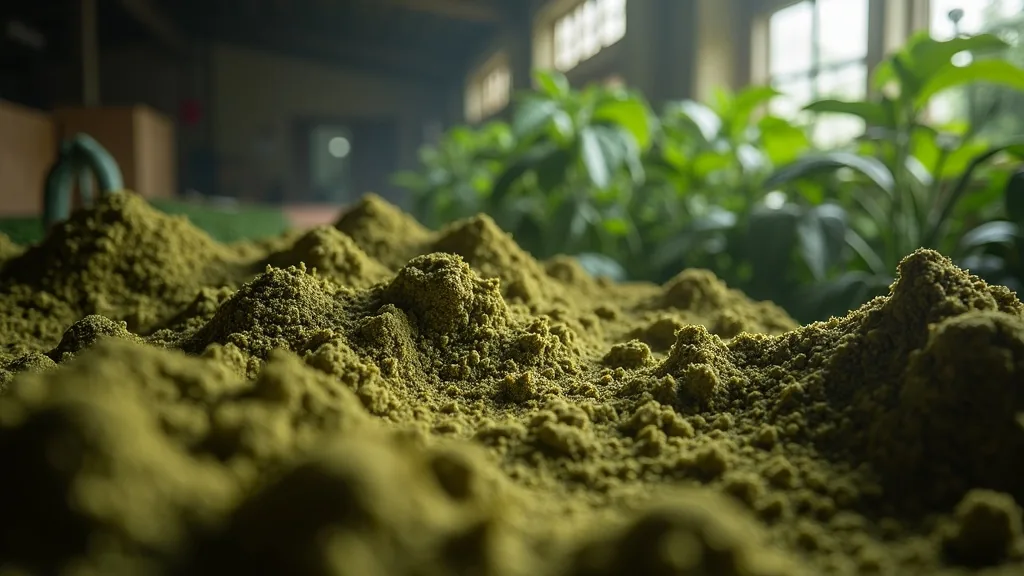
The aroma of freshly harvested kratom fills the air in West Kalimantan, where the leaves are meticulously picked and prepared for export. As the sun rises over the lush greenery, the complexities of kratom pricing come into focus, revealing a market influenced by diverse factors.
What are the main factors that drive Indonesian kratom prices for EU buyers?
The primary factors driving Indonesian kratom prices for EU buyers include quality, demand, shipping logistics, and market competition. High-quality kratom, derived from top-tier plantations in regions like Bali and West Kalimantan, commands higher prices. Demand fluctuates seasonally; for example, during winter months in Europe, the demand often increases, leading to elevated prices. Additionally, shipping logistics, including freight costs and delivery times, can significantly influence the final cost.
How do origin, grade, and processing level affect kratom pricing?
Origin, grade, and processing level are crucial determinants of kratom pricing. Kratom sourced from Bali, known for its premium quality, typically fetches higher prices compared to lower-grade varieties from other regions. Grades can vary from white, green, to red vein kratom, each occupying distinct price points due to their unique effects and popularity. Processing levels, which include drying and grinding methods, also play a role; for instance, finely powdered kratom processed via advanced methods can be priced around $15 USD per kilogram (approximately 225,000 IDR), compared to coarsely ground varieties priced at $10 USD (about 150,000 IDR).
Are long-term fixed-price contracts common in the kratom export sector?
Long-term fixed-price contracts are indeed common in the kratom export sector, providing stability for both exporters and importers. These contracts often span multiple months or even years, securing a set price that helps buyers manage their budget against market volatility. For example, a B2B kratom supplier may negotiate a contract at $12 USD per kilogram, locking in this price to mitigate fluctuations caused by seasonal demand or shifts in currency exchange rates.
How do currency movements (IDR vs EUR) impact kratom import costs?
Currency movements between the Indonesian Rupiah (IDR) and the Euro (EUR) significantly impact kratom import costs. A strengthening Euro against the IDR can lower the effective cost for European buyers. For instance, if the exchange rate shifts from 15,000 IDR per Euro to 14,000 IDR, buyers can save approximately 7% on their imports. Conversely, when the Euro weakens, the import costs can rise, affecting pricing strategies and negotiation tactics within the B2B kratom market.
The cost structure of the kratom supply chain
The cost structure of the kratom supply chain includes several layers: cultivation, harvesting, processing, and exportation. Farmers in Indonesia typically sell raw kratom leaves for about 5,000 IDR per kilogram. After harvesting, the costs can rise dramatically due to labor and processing. For example, processing costs may add an additional 50% to the price, resulting in a final export price around 15,000 IDR per kilogram for processed kratom. Exporters must also account for shipping and customs fees, which can be substantial given the increasing regulatory scrutiny in international markets.
Current market trends in kratom pricing
Current market trends indicate a steady increase in kratom pricing as demand grows within the European market. Recent reports suggest that the average kratom bulk price from Indonesia has risen by 10-15% over the past two years, driven by heightened consumer awareness and regulatory changes in the EU. This trend indicates that suppliers must adapt their pricing strategies to remain competitive while ensuring product quality and compliance with international regulations.
The impact of sustainability and certification on kratom pricing
Sustainability and certification practices significantly influence kratom pricing. Exporters who adhere to sustainable farming practices may incur higher initial costs but can command premium prices. Certifications such as Good Agricultural Practices (GAP) can enhance the marketability of kratom products, allowing exporters to charge upwards of 20% more. As European consumers increasingly prefer ethically sourced products, the willingness to pay extra for certified kratom is evident.
For more information about kratom and its cultivation in Indonesia, visit Indonesia Travel or explore the UNESCO World Heritage Sites.
For a deeper understanding of the kratom market landscape, visit our homepage or check our [Kratom Supply Chain Guide](#) for insights on sourcing and quality assurance.
As you navigate the complexities of kratom pricing, feel free to contact the team for tailored insights and support in your kratom import journey.
Planning specifics? See booking details or gmp grade processing for indonesian kratom expectations of european.
As of 2026, lab-tested, export-compliant Bali kratom powder indicatively costs somewhere between roughly USD 12 and USD 22 per kilogram, landed in Europe, depending on grade, alkaloid profile and order volume. That single number is really a stack of separate costs — farmgate raw material, processing, testing, inspection, freight and margin. The worked example below shows how each layer builds the final landed cost, so you can budget from real components instead of a headline figure. Figures are illustrative, not a quotation, and move with harvest, currency and shipping conditions.
What goes into the Bali kratom wholesale cost per kilo?
Buyers often ask why one supplier quotes far below another. Usually the cheap quote has quietly dropped testing, surveyor inspection or proper fine-milling — the exact steps that make material saleable and compliant in Europe. Here is an indicative build-up for one kilogram of mid-grade, fine, lab-tested powder as of 2026:
| Cost component | Indicative USD / kg | What it covers |
|---|---|---|
| Farmgate raw material | 6.00 | Dried leaf from Kalimantan / Sulawesi growers |
| Processing & fine milling | 1.50 | Drying, grinding to fine export-grade powder |
| Lab testing (allocated) | 0.80 | Heavy metals, microbial, alkaloid assay |
| Surveyor / pre-shipment inspection | 0.40 | Independent quantity & quality check |
| Export docs, packaging & handling | 0.90 | Food-grade bags, labelling, paperwork |
| Freight to Europe (sea, allocated) | 1.20 | Container slot, port fees, insurance |
| Exporter margin | 2.50 | Sourcing, QC oversight, risk, service |
| Indicative landed cost | ≈ 13.30 | Mid-grade, lab-tested, delivered |
Change any input — a higher alkaloid grade, air freight instead of sea, or a small trial order instead of a full pallet — and the total moves accordingly. For a firm figure on Bali kratom wholesale pricing, share your grade, quantity and destination port.
Why did kratom prices from Indonesia increase after export of coarse material was banned?
Before 2024, a large share of Indonesian kratom left the country as coarse, crushed leaf — cheap to prepare and largely untested. Since 2024, export practice has shifted decisively toward fine, quality-graded, lab-tested powder, and coarse unprocessed material has effectively been pushed out of the compliant export channel. That shift raised the floor price for two reasons.
- Added processing: fine milling, moisture control and consistent particle size cost more than simply crushing and bagging leaf.
- Mandatory testing & documentation: heavy-metal, microbial and alkaloid testing plus surveyor inspection are now baseline, not optional — real costs that every compliant kilo carries.
The upside for serious European buyers is consistency: lab-tested, export-compliant kratom reduces the risk of rejected or seized shipments, which is far more expensive than a slightly higher price per kilo. Coarse-era pricing usually means material that would not clear modern compliance checks.
How much should I budget for lab-tested export-compliant Bali kratom per metric ton?
As a planning guide for 2026, budget roughly USD 12,000–22,000 per metric ton for fine, lab-tested, export-compliant Bali kratom delivered to Europe, with mid-grade material near the USD 13,000–15,000 mark using the build-up above. Larger, repeat orders through bulk metric-ton supply generally sit at the lower end; small trial lots and premium alkaloid grades sit higher. Treat these as indicative ranges for planning, not a fixed quote — final pricing depends on live harvest, currency and freight conditions.
We are part of Juara Holding Group — operating from Bali across Indonesia since 2015 — and we quote transparently against the same cost components shown above. For a current, itemised figure matched to your grade and volume, message our BD desk on WhatsApp at +62 811-3941-4563 or email [email protected].