How Exporters Test Kratom for Adulteration & Purity
Kratom adulteration testing for Indonesian suppliers is the set of laboratory and in-house checks that confirm a shipment is pure, correctly graded Mitragyna speciosa leaf — and not a product secretly diluted with fillers, spent leaf, or another plant. Unlike contaminant screening (which looks for heavy metals and microbes), adulteration testing answers a different question: is what is in the bag actually what the label says, at the purity claimed? As of 2026, serious wholesale buyers increasingly treat documented adulteration and purity results as a condition of purchase, not an optional extra.
What counts as kratom adulteration?
Adulteration is the deliberate or negligent addition of material that lowers the true purity of a lot while keeping its weight or appearance. It is distinct from natural contamination. The most common forms an honest exporter has to guard against include:
- Bulking agents and fillers — starches such as maltodextrin, rice or wheat flour, or other cheap powders blended in to add weight.
- Spent or extracted leaf — leaf material that has already had alkaloids extracted, then re-dried and mixed back into fresh powder.
- Stem-and-vein padding — excessive stem and vein content ground into what is sold as clean leaf powder.
- Colorants and dyes — green pigments used to make dull or off-batch powder look fresher than it is.
- Species substitution — other Mitragyna or look-alike botanicals passed off as, or blended into, Mitragyna speciosa.
Because kratom originates from the forests of Kalimantan and passes through many hands before export, adulteration can be introduced at the collector, drying, or grinding stage. That is why testing focuses on identity and purity together, rather than trusting a single supplier’s word.
How does kratom adulteration testing for Indonesian suppliers work in practice?
A credible exporter does not rely on one test. Kratom adulteration testing for Indonesian suppliers works as a layered sequence, moving from fast visual screening to instrument-based confirmation. Each layer is designed to catch a different type of fraud, so that a lot has to pass all of them before it is cleared for shipment.
1. Botanical identity: macroscopic and microscopic checks
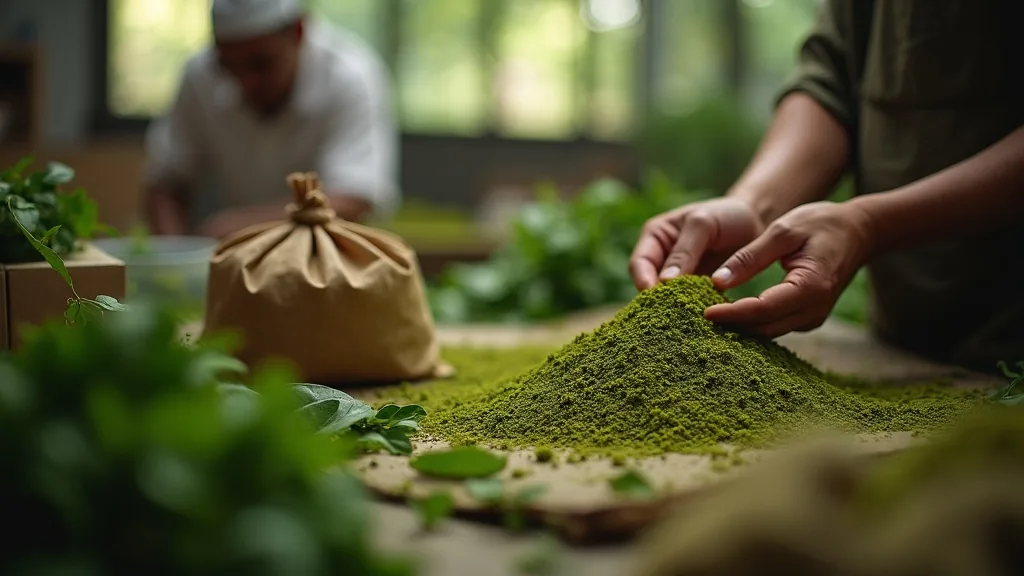
The first line of defence is physical examination. Macroscopic inspection looks at colour, aroma, texture, and the ratio of fine leaf powder to visible stem and fibre. Microscopy goes further: under magnification, genuine Mitragyna speciosa leaf shows characteristic cell structures, and a trained analyst can spot foreign starch granules, unusual fibres, or particles that do not belong. Microscopy is one of the most cost-effective ways to detect crude bulking, because flour and starch granules look nothing like leaf tissue.
2. Starch and filler tests
A simple, widely used screen is the iodine starch test. When iodine solution is applied to a sample, added starches such as maltodextrin or flour turn a dark blue-black, while pure leaf powder does not react the same way. A strong colour change is a red flag that prompts deeper investigation. This test is inexpensive enough to run on many lots, which makes it a practical routine check rather than a one-off.
3. Alkaloid profiling and chemical fingerprinting
Mitragynine is the principal marker alkaloid used to authenticate kratom leaf — here it functions purely as a chemical identity marker, not a claim about any effect. Thin-layer chromatography (TLC) and high-performance liquid chromatography (HPLC) produce a fingerprint of the alkaloid profile. If a sample is heavily bulked with inert filler, the measured alkaloid content per gram drops below what genuine leaf of that grade should show, exposing dilution even when the powder looks convincing. A distorted or missing fingerprint can also flag spent leaf or species substitution.
4. Ash content and foreign matter
Total ash and acid-insoluble ash values help reveal mineral adulterants — sand, soil, or added inorganic weight — because these push ash figures above the normal range for clean leaf. Foreign-matter analysis, where a weighed sample is examined for non-leaf material, rounds out the purity picture. Together these methods separate honest natural variation from deliberate padding.
Why should samples go to an accredited laboratory?
In-house screening is valuable for catching obvious problems quickly and cheaply, but it is not a substitute for independent confirmation. A complete programme of kratom adulteration testing for Indonesian suppliers therefore pairs routine internal checks with periodic third-party verification. Instrument methods such as HPLC, and any result a buyer will rely on contractually, should be run or verified by a properly accredited lab using validated methods. Accreditation, method choice, turnaround, and how a lab reports results all affect how much weight a certificate of analysis actually carries. We cover how to evaluate those factors in our guide to choosing laboratories for kratom testing, which explains what accreditation scopes and reputable methods to look for before you trust a number on paper.
How does adulteration testing connect to grading and contracts?
Purity is not just a pass-or-fail gate — it is what defines a grade. A lot with high stem-and-vein content, low alkaloid readings, or detectable filler is a different product from clean, single-origin leaf, and it should be priced and described differently. This is why adulteration testing feeds directly into commercial terms. When purity thresholds, sampling method, and acceptable ash or foreign-matter limits are written into the agreement, both sides know exactly what “pass” means. Our overview of defining kratom quality grades, specifications, and contract terms shows how to turn these test parameters into enforceable specifications rather than vague promises.
Pricing follows the same logic. Because genuine, tested, correctly graded leaf costs more to source and verify than bulked material, buyers should treat unusually low quotes with caution. Any price we share is indicative only and depends on grade, volume, testing scope, and current market conditions.
What documentation should a buyer expect?
An honest exporter should be able to show, per lot: identity confirmation, the purity screens performed, and where relevant a laboratory certificate of analysis tied to that specific batch by sample reference. As of 2026, export rules for kratom from Indonesia continue to evolve, so buyers should always verify the current regulatory status in both Indonesia and the destination country before contracting — we do not promise specific customs outcomes or fixed multi-year rules. What we can commit to is transparent, batch-linked testing records and clear communication about what each result does and does not prove.
Working with a compliance-first supplier
Adulteration and purity testing only means something when it sits inside a documented quality system run by an accountable, licensed operator. If you are evaluating sourcing partners, our page on what it means to work with a licensed, compliant kratom export company explains how testing, documentation, and legal standing fit together. Bali Kratom Export is part of Juara Holding Group — operating from Bali across Indonesia since 2015 — and our approach is built on honest QC records and realistic commitments, not marketing claims.
If you are a wholesale buyer who wants to understand our identity checks, filler screening, and alkaloid-profiling process before requesting samples, we are glad to walk you through it. Message our business desk on WhatsApp at +62 811-3941-4563 or email [email protected] to discuss grades, testing scope, and current indicative pricing for your market.