Kratom Export Shipment Documents: Complete Checklist
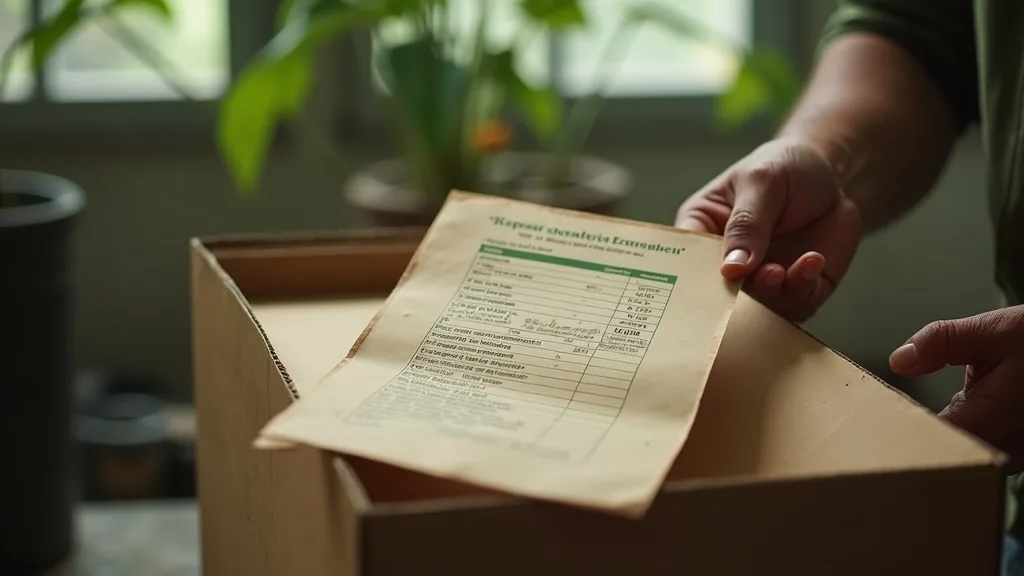
The core documents required for a kratom export shipment from Indonesia are a commercial invoice, a packing list, a Certificate of Analysis (COA), a Surveyor’s report (Laporan Surveyor / LS), an HS-code declaration, and the transport document — a Bill of Lading for sea freight or an Air Waybill for air freight — usually accompanied by a Certificate of Origin. As of 2026, a credible wholesale supplier should hand you every one of these before or as your goods leave port, and none of them should be treated as optional. This checklist walks through each document in plain language so you know exactly what to ask for as a buyer.
Kratom (Mitragyna speciosa) is a botanical raw material native to the forests of Kalimantan (Indonesian Borneo), and Indonesia remains the primary source of the world’s exported kratom leaf and powder. Because paperwork — not the product alone — determines whether a shipment can be presented to customs on the buyer’s side, understanding the full document set protects both your money and your timeline. This guide is written for global buyers; if you import specifically into the EU, the requirements are stricter and best handled separately.
What Are the Documents Required for a Kratom Export Shipment From Indonesia?
Here is the standard document set a buyer should receive for a container or air shipment as of 2026. Use it as a checklist to run against any quotation you accept:
- Commercial invoice — the legal and financial description of the sale.
- Packing list — how the goods are physically packed, counted, and weighed.
- Certificate of Analysis (COA) — third-party laboratory results for the specific lot.
- Surveyor’s report (Laporan Surveyor / LS) — an independent pre-shipment inspection required for many Indonesian export categories.
- HS-code declaration — the tariff classification carried on the Indonesian export declaration (PEB).
- Certificate of Origin (COO) — confirms the goods originate in Indonesia.
- Bill of Lading or Air Waybill — the transport contract and title document from the carrier.
The sections below explain what each one should contain and the red flags to watch for.
What Should the Commercial Invoice Show?
The commercial invoice is the backbone of the shipment. At minimum it should state the full legal names and addresses of exporter and buyer, a clear product description, net and gross weight, unit price and total value, currency, the agreed Incoterms (for example FOB Surabaya or CIF your port), payment terms, and the invoice and order numbers. The description and value here must match every other document exactly — a mismatch between the invoice value and the packing list, or between the product description and the HS code, is one of the most common reasons a shipment gets held for questions on arrival. Prices quoted to you at this stage are indicative and depend on grade, volume, and freight; always treat a quotation as a working figure until it is confirmed in a signed proforma.
Why Does the Packing List Matter?
The packing list translates the invoice into physical reality: number of bags, drums or cartons, net weight and gross weight per unit, total pieces, and marks and numbers on the packaging. Customs and your freight forwarder use it to reconcile what was declared against what physically arrives. Insist that lot or batch numbers on the packing list correspond to the COA, so any single carton can be traced back to its laboratory test. Order size also shapes your paperwork and freight economics; if you are still deciding how much to buy, our minimum order quantity guide explains how volume affects packing, pricing, and shipping mode.
What Is a Certificate of Analysis, and What Should It Cover?
A Certificate of Analysis (COA) is the third-party laboratory report for the exact lot you are buying. Independent lab testing is a standard industry expectation, and for a botanical raw material a serious COA typically reports moisture content, microbiological screening (such as total plate count, yeast and mould, and pathogens like Salmonella and E. coli), and heavy metals (lead, arsenic, cadmium, mercury). Some buyers also request alkaloid profiling. What matters is that the COA is lot-specific, dated, and issued by an accredited laboratory — not a generic certificate reused across shipments. We make no health or efficacy claims about the product itself; the COA exists to document composition and contamination screening, which is a quality-control and compliance matter, not a medical one. Ask for the COA before you pay a balance, and confirm the batch number matches your packing list.
What Is the Surveyor’s Report (Laporan Surveyor)?
For a range of Indonesian export goods, an independent Surveyor’s report — the Laporan Surveyor, or LS — is part of the export process. It is a pre-shipment inspection carried out by an authorised surveyor company that verifies the goods against the declaration before loading. Because the exact categories and requirements can change, treat this as “per 2026, verify current rules” and ask your supplier which surveyor requirements apply to your specific shipment. A transparent exporter will tell you plainly whether an LS applies and will share it as part of your document pack rather than leaving you to discover a gap after the goods have sailed.
How Is the HS Code Declared on a Kratom Shipment?
The HS code is the harmonized tariff classification used on the Indonesian export declaration (PEB) and read by the destination customs authority to assess duties and controls. Getting the classification and its supporting description consistent across the invoice, packing list, and declaration is essential — an inconsistent or vague HS declaration is a frequent trigger for inspection and delay. Classification for botanical materials can be nuanced, so it deserves attention rather than a copy-paste from a previous shipment. We cover the specifics, along with how classification interacts with inspection risk, in our guide to customs clearance, HS classification, documentation and risk. Note that we can prepare accurate export documentation, but no exporter can guarantee how a destination customs office will rule — that decision always rests with the importing country.
Certificate of Origin and Transport Documents
The Certificate of Origin (COO) confirms the goods were produced in Indonesia and is often requested by the buyer’s customs authority. The transport document — a Bill of Lading (B/L) for ocean freight or an Air Waybill (AWB) for air freight — is issued by the carrier and functions as both the contract of carriage and, for a B/L, a document of title. Check that consignee details, port of loading, port of discharge, and the goods description on the B/L or AWB align with your invoice. Depending on your destination and your own importer’s needs, additional documents such as a phytosanitary certificate or an insurance certificate may be relevant; confirm these early rather than at the last minute.
Does My Destination Country Allow Kratom Imports?
This is the single most important question, and the responsibility sits with you as the importer, not with the exporter. Legal status varies widely between countries — and even within them — and it changes over time. As of 2026, kratom is legal at the United States federal level, the largest import market, but individual states, counties, and cities restrict or ban it, so goods legal to export from Indonesia can still be refused entry at a U.S. state border. Several countries prohibit it outright: for example, it is banned in Australia and is restricted or controlled in the United Kingdom and in a number of EU member states; Thailand, long a prohibition country, revised its own domestic laws in recent years. Because these rules shift, treat every point here as “per 2026, verify current rules” and confirm the live position with your own customs authority before ordering. If you want structured help mapping your route, our kratom export compliance consultation is built for exactly this. We will never promise that your goods will clear a given border — that would be dishonest, because no exporter controls an importing country’s decision.
How Should a Buyer Verify the Documents?
Run three quick checks on any document set. First, cross-reference: the product description, weights, values, and batch numbers must agree across the invoice, packing list, COA, and transport document. Second, confirm the COA is lot-specific, dated, and from an accredited lab — not a generic template. Third, ask directly which of the documents required for a kratom export shipment from Indonesia apply to your specific consignment and destination, and expect a clear answer. A supplier who is evasive about the Surveyor’s report, the HS declaration, or destination legality is a supplier to be cautious with. Honest wholesale sourcing means the paperwork is complete, verifiable, and shared upfront.
Talk to a Compliance-First Supplier
If you are planning a shipment and want a straight answer on the documents required for a kratom export shipment from Indonesia, quality-control testing, and realistic logistics, we are happy to walk you through it without health claims or customs promises we cannot keep. Balikratomexport.com is part of Juara Holding Group — operating from Bali across Indonesia since 2015 — and our focus is honest, document-backed wholesale supply. Message our business desk on WhatsApp at https://wa.me/6281139414563 or email [email protected] to request a full sample document pack and discuss your requirements.